I know Donington Park is not in Yorkshire but it is accessible for many Yorkshire folk and has one of the best motorsport programmes around. The Donington Historic is as near to Goodwood as you will get, without actually going to Goodwood.
An action-packed timetable has been announced for the 2022 Donington Historic Festival, which powers back to Donington Park on Saturday and Sunday 30 April and 1 May. Highlights include two thundering races for original factory Group C cars, a dedicated 80-minute spectacular into the twilight for Ford GT40s and the epic endurance battle that is the Royal Automobile Club Pall Mall Cup.
Add in Touring Cars spanning four decades, a round of the hugely popular Jaguar Classic Challenge, the glorious pre-‘56 and pre-‘61 sports cars of the combined Royal Automobile Club Woodcote Trophy & Stirling Moss Trophy race and a host of sprightly pre-War sports cars which are campaigned no less fiercely than their younger counterparts, and you have an unmissable weekend of historic motorsport. Spectators will receive a warm welcome as they return for the first time since 2019, and a mass of other attractions, including car club displays and parades, trade stands and lunchtime track demonstrations will ensure non-stop entertainment on and off the track.
The provisional timetable for the 2022 Donington Historic Festival is as follows:
Saturday, 30 April 09:05 – 09:35 Jaguar Classic Challenge for pre-‘66 Jaguar cars (qualifying) 09:45 – 10:15 Sixties Touring Car Challenge with U2TC for under two-litre Touring Cars (qualifying) 10:25 – 10:55 C1 by Duncan Hamilton ROFGO for original factory Group C1 cars (qualifying) 11:05 – 11:35 Royal Automobile Club Woodcote Trophy & Stirling Moss Trophy for pre-’56 and pre-’61 Sports Cars (qualifying) 11:45 – 12:25 Amon Cup for Ford GT40s (qualifying) 12:40 – 13:40 Jaguar Classic Challenge for pre-‘66 Jaguar cars (race) 13:40 – 14:25 Lunch Break / Demonstrations 14:25 – 15:25 Sixties Touring Car Challenge with U2TC for under two-litre Touring Cars (race) 15:40 – 16:20 C1 by Duncan Hamilton ROFGO for original factory Group C1 cars (race 1) 16:35 – 17:35 Royal Automobile Club Woodcote Trophy & Stirling Moss Trophy for pre-’56 and pre-’61 Sports Cars (race) 17:50 – 19:10 Amon Cup for Ford GT40s (race)
Sunday, 1 May 09:05 – 09:30 The ‘Mad Jack’ for Pre-War Sports Cars (qualifying) 09:40 – 10:10 Historic Touring Car Challenge and Tony Dron Trophy for ‘70s and ‘80s Touring Cars (qualifying) 10:20 – 11:10 The Royal Automobile Club Pall Mall Cup for pre-’66 GT and Touring Cars, pre-’63 GTs and pre-’60 Sports Cars (qualifying) 11:25 – 12:10 The ‘Mad Jack’ for Pre-War Sports Cars (race) 12:10 – 13:00 Lunch Break / Demonstrations 13:00 – 14:00 Historic Touring Car Challenge and Tony Dron Trophy for ‘70s and ‘80s Touring Cars (race) 14:15 – 14:55 C1 by Duncan Hamilton ROFGO for original factory Group C1 cars (race 2) 15:10 – 18:10 The Royal Automobile Club Pall Mall Cup for pre-’66 GT and Touring Cars, pre-’63 GTs and pre-’60 Sports Cars (race)
Ticket prices and Early Bird discounts Early Bird advance discounted tickets are still available from www.doningtonhistoric.com. Adult (16+) two-day advance weekend tickets cost £35 (£40 from 1 February) and Adult single-day advance tickets cost £21 (£25 from 1 February). Teen (13-15) two-day advance weekend tickets cost £21 (£25 from 1 February), while Teen one-day advance tickets cost £13 (£16 from 1 February). Children aged under 13 are admitted for free.
1974 marked a significant turning point for Tony as his dealings with Datsun drew to a close and he stepped up to managing the Dealer Opel Team. It was unfortunate timing as Rallies in the first quarter of 1974 were cancelled due to the fuel crisis. The car industry was also undergoing significant change with takeovers and mergers. Opel and Vauxhall were brought together under General Motors and they competed under different brands. Vauxhall promoted the Chevette and Opel the Kadett.
Tony entered the Dealer Opel Team in the British Rally championship and he continued to drive with Mike Broad as his co-driver. Other DOT drivers included Tony Pond, Rosemary Smith and Ari Vatanen. The best result of the year was a fourth in the Welsh though two retirements were disappointing.
Headquarters of Dealer Tea. Opel at Tong near Bradford)
In addition, DOT entered the Avon Tour of Britain for showroom cars tested on racetracks and rally stages during a 1,000-mile journey around the country. The Tour attracted the biggest names in motorsport, including Formula One greats Graham Hill, James Hunt and Jody Scheckter and rally stars like Roger Clark, Tony Pond and Andrew Cowan. Tony (Fall) drove an Opel Commodore on the event which he completed but not particularly high in the order.
Tony also tackled the TAP Portugal Rally in an Opel Ascona entered by Team Sweden and co-driven by Robin Turvey and the East African Safari in a Peugeot 504, both resulted in retirements. Tony Pond achieved a win on the Burmah Rally with Mike Broad in the co-driving seat.
In 1975 Tony was drawn deeper into the management aspects of the Dealer Opel Team and only managed two competitive outings. For the Mintex Dales Rally he renewed his partnership with Mike Wood securing 17th in an Opel Kadett GTE. Tony also drove an Opel Commodore in the British Saloon car championship at Mallory Park but didn’t finish due to a head gasket failure. The rally team were using the Opel Kadett which were converted from left hand drive to right hand drive in a new base at Tong Park Auto’s near Bradford. Once converted the cars were then prepared as rally cars with the shells strengthened and safety equipment fitted.
1976 was Tony Falls last season as a professional driver before taking up team management full time. Attempts to sign Pond and Vatanen failed and so Fall felt he had little option but to drive for the team. He partnered with Mike Broad in the Opel Kadett as they mounted an all-out attack on the British Rally championship. A win on the Gwynned Rally was followed by three sixth places and three retirements. Only one non British event was tackled, the Rally du Maroc where he retired with gearbox problems.
1976 Lombard Rally
Falls personal performance was less important than the teams which proved to be a considerable and provided opportunities for many top drivers including Russell Brookes, Tony Pond, Ari Vatanen, Walter Rohrl and Brian Culcheth. In 1981 Jimmy McRae took the new Ascona 400 to victory in the British Rally Championship.
Although DOT were successful with the Opel Kadett, General Motors decided to stop selling Opel’s in the UK to concentrate on the Vauxhall brand. The Dealer Opel Team was disbanded and Tony was offered the position of Director of Motorsport – GM-Eurosport based in Germany.
Opel entered 2 cars for the 1980 Marlboro Safari rally, one of them – driven by Jean Pierre Nicholas and Henry Liddon secured fifth overall and the other driven by Jochi Kleint & Gunter Wanger achieved ninth.
In 1982 Tony signed Walter Rohrl to drive for the Opel Team and embarked on one of his most difficult management challenges. The problems started almost immediately after signing on. Just prior to the Monte Carlo Rally Rothmans asked Rohrl to spend three days making a promotional film. Having just returned from a recce Rohrl refused, preferring to spend the time in the Bavarian forest skiing. Not surprisingly this caused a major rift between Rohrl, Tony and the Rothmans company who were sponsoring the team.
Despite these difficulties Röhrl won the Monte and a strong run in subsequent events meant that he was in the surprising position of potentially winning the World Championship. Eventually it came down to the Ivory Coast Rally. Despite the opportunity to become World Champion Rohrl did not want to go to Africa twice in a year. He refused to practice and arrived the day before the start and left on the day it finished and this only served to grow the rift between Rorl and the team management. By the time the RAC came round Rohrl was already World Champion and Opel had also won the European and British championships. As a result Opel and Rothmans planned a major PR event on the evening before the rally start. Rohrl preferred to get a good nights sleep and refused to attend resulting in an angry exchange between Fall and Rohrl.
Rohrl went off to bed and the next morning found that he had been replaced by Kleint.
Said Tony at the time
“He had this strange idea that he was employed by Opel, and that whatever arrangement we had with Rothmans had nothing to do with him.”
Tony also took the lead in the GM Lotus Formulae which launched the careers of many F1 drivers including Coulthard, Mc Nish, Hakinnen and Barrachello. What really ignited the series was that five of the Euroseries’ 10 rounds supported Formula One Grand Prix events. Tony was also involved in discussions with a possible GM move into formulae One with a badge engineered car. A Limor engine was to be placed in a Williams chassis but the negotiation’s fell through.
After ten years with Opel Tony moved from Motorsport management to the commercial world and his initial venture was to establish Opel Classics. The company restored and maintained ex Opel competition cars and Opel Gt models.
During his time at GM Tony had the body shells prepared by Safety Devices who prepared the Ascona and Manta shells and fitted the roll cages. In 1991 Tony persuaded German roll bar king Winfried Matter to buy the company and place him in as manager. A year later Tony bought out Winfried to become sole owner. Under Tony’s management the company expanded its product range and became a supplier to Land Rover as well as developing cages for race cars, touring cars and classic cars. They also developed an interesting line in roll bars for Toyota trucks working in the oil fields of Azerbiajan
Tony also returned to his first love with Historic Rally events in a Datsun 240Z starting with the 1991 RAC National Historic Rally with co-driver Mike Kempley. In 1995 he tackled the London-Mexico recreation event with Roy Dixon in a Volvo where he placed, fifth, one place higher than his event with Ian Greeves. He gradually entered more and more historic events in his Datsun partnering with Yvonne Mehta and Jonathan Hall-Smith.
Tony died in 2007 aged 67 while working on the East African Safari historic rally when he passed away in his sleep in Arusha, Tanzania
You can read all four parts of the Tony Fall story on our website http://www.classicyorkshire.co.uk. Subscribe to notifications of new stories and events.
The Monte Carlo Rally was originally held in January as the prestigious ‘Monte’ attracted wealthy car fans to the Principality outside the summer season.
Participants could opt for one of the many starting points across Europe, and the number of points awarded depended on how demanding their chosen route was. Additional points were then awarded in Monte Carlo, where the teams competed in various disciplines that were later abolished. These included being judged on elegance and comfort and the technical condition of the vehicles after the Riviera stretch. In addition, the drivers would have to demonstrate their skills in a test.
In 1912, a vehicle from Mladá Boleslav was among the competitors. At temperatures as low as -18 degrees, Alexander ‘Count Sascha’ Kolowrat-Krakowsky set off from Vienna on the 1,319-kilometre route. The Laurin & Klement had an open body and so instead of a racing overall, Count Kolowrat-Krakowsky wore thick fur.
The cars from Mladá Boleslav have borne the ŠKODA emblem since 1925, and their first sporting success came at the Monte Carlo Rally. in January 1936, the duo of Zdeněk Pohl and Ing Jaroslav Hausman took an second place in the up to 1,500 cm3 class with the ŠKODA POPULAR Sport roadster. This result inspired the company to expand its model range to include the ŠKODA POPULAR MONTE CARLO, which was offered as a roadster and a coupé. Just seventy of these vehicles were built between 1936 and 1939.
Pohl and Hausman decided that they would not start the 1937 rally in Athens, which was ‘only’ 3,852 kilometres away from Monaco. Instead, they would depart from Palermo in Sicily, 4,134 kilometres away, earning them 500 points. Only four of the original 30 vehicles survived the rigours of this demanding route. With their ŠKODA RAPID coupé, powered by a reliable SV four-cylinder 1.4 litre engine they successfully passed the checkpoints. The duo from ended up in fourth place overall because of two penalty points. These were deducted by the commissioners after their English rivals protested about the rear-view mirror being too small. The mirror’s outer dimensions were in line with the regulations, but the reflective surface without the frame was much smaller.
Political and economic developments after the Second World War meant that the car manufacturer was cut off from many of its traditional markets and prestigious sporting events due to the ‘Iron Curtain’. As a result, only private teams could compete in the Monte Carlo Rally from 1949 onwards, and the works team did not return to Monte Carlo until January 1956. Overseas owners of ŠKODA vehicles seized the opportunity; the best results in the wintry conditions were achieved by teams from Scandinavia – their successes included a hat-trick in the up to 1,300 cm3 class with the ŠKODA OCTAVIA TOURING SPORT. At the 1961 MCR, the Finns Esko Keinänen/Rainer Eklund won and at the same time took a magnificent sixth place overall. They dominated the ‘Thirteen Hundred’ class in 1962, as well. In January 1963, the Norwegians Edward Gjolberg and Carl Karlan followed up on these successes with the OCTAVIA TS 1200.
In subsequent years, the Monte Carlo Rally became increasingly geared towards professionals with fewer and fewer private drivers taking part. In 1973, the traditional January event became the opening race of the newly announced World Rally Championship. ŠKODA vehicles with a traditional drive concept and central tube frame were followed by models with rear-mounted engines and self-supporting bodywork. The successes of two ŠKODA 130 RS coupés stand out, in particular. In 1977, when only 43 of 198 vehicles reached the finish line at the ‘Monte’, ŠKODA dominated the up to 1,300 cm3 category; the winning duo Václav Blahna/Lubislav Hlávka were followed by their works team colleagues Milan Zapadlo and Jiří Motal in second place. In the overall standings, they finished 12th and 15th respectively.
ŠKODA then introduced the FELICIA Kit Car. At the 1999 Monte Carlo Rally, a new era began with the OCTAVIA WRC entering the top category for vehicles with four-wheel drive. The works driver team Armin Schwarz/Manfred Hiemer took 4th place in the overall standings with it in 2001.
The shorter and significantly lighter FABIA WRC was homologated in 2003. The turbocharged four-cylinder engine delivered an output of 221 kW (300 hp) and a torque of 600 Nm from a two-litre displacement. A hydraulically operated handbrake assisted in cornering; it braked the rear wheels, while simultaneously disengaging the intermediate axle differential of the all-wheel drive. The ŠKODA FABIA SUPER 2000 represented a further step in its evolution in 2009 when it finished fourth in this run of the Monte Carlo Rally, which was on the Intercontinental Rally Challenge (IRC) calendar at the time. In 2010 and 2011, the SUPER 2000 finished in second place before taking victory in 2013.
After a series of successes in the WRC2 category, largely achieved by private teams, the new FABIA R5 opened another successful chapter for the ŠKODA FABIA; the factory team took first and second place in the 2017 MCR. The following year, Jan Kopecký/Pavel Dresler won the RC2 class in addition to the WRC2 category. At the Monte Carlo Rally 2022, the Toksport WRT team, supported by ŠKODA Motorsport, has its sights set on victory; Norwegian Andereas Mikkelsen aims to defend his victory last year in the FABIA Rally2 evo alongside Torstein Eriksen (NOR).
RACE THE WAVES at The Royal Hall Bridlington Spa, and on the foreshore outside The Royal Hall on Bridlington Sands. This is probably one of the most unusual classic car events you will get to see. The cars on display here are not the polished and shiny fare of most events. In fact matt black paint and patinaed rust are the order of the day.
This Family Friendly event is absolutely FREE. The Race the Waves Car and Bike Display, Retail Emporium, Entertainment and Vintage Motorbike Exhibition inside, what’s not to love!
Inside The Royal Hall in Bridlington Spa will feature around 60 Purveyors of the finest Steampunk, Alternative, Retro and Vintage, Goth Stands, Automotive Memorabilia Stands etc Live Entertainment, Tea Room, Bars, Vintage Scooters and Classic Bike Exhibition and much more.
Outside The Royal Hall on the Foreshore and Sands is a truly Retro experience and will feature vehicles exhibiting and riding on the sands in an old fashioned manner, and a veritable display of Rat Rods, Hot Rods, Vehicles and Bikes for example.
One of our subscribers is trying to track down the owner of her father in laws classic car. It’s a 1957 Ford Zodiac Mk2 lowline in two tone blue. Registration YFG 382. A few years ago she was in touch with the new owner and he lived in Sheffield. It’s since been sold but she needs to track down the new owner as she has some extensive history, original parts, and paperwork and would love to have them reunited with the car. If you could help in any way please contact them directly on the email below.
Based in the East Riding of Yorkshire, the East Riding Stages Rally is a closed road rally taking place on February 27th 2022.The event follows in the footsteps of the successful Clacton Rally which first ran in 2018, after Motorsport UK gave the green light for competitive motorsport events to take place on closed public roads.
Yorkshire has long been the hotbed of rallying in England and it is fitting that the county now joins the growing band of closed road stage rallies. Run by Beverley and District Motor Club, the club are hoping that the event will become a firm favourite amongst competitors and marshals alike. Running in late February, it gives crews a chance to shake down their old and new machinery without the pressure of championship points at stake.
The event will have four special stages, run over two loops, making a total of eight stages. The rally will offer 50 competitive miles over a mixture of roads, from tight and twisty to straight and simple, and have something new to test even the most seasoned competitors.
1969 was another full season of international events with eight different co drivers across 9 international rallies. Tony achieved a 15th on the Safari only finishing due to his skills at bodging repairs. His Fulvia arrived at the finish with its rear axle held in by the steel cable off its winch.
The Monte Carlo saw a double DNF for the Lancia team with Fall severely crashing his Lancia Fulvia. However, it was The Monte where Tony’s relationship with Datsun started. Both Lancia drivers (Tony and Rauno Aaltonen) crashed very close to each other and met up at the bottom of a ravine. It was here that Rauno told Tony that the Japanese wanted them to test out a new rally sports car.
1969 Monte
Tony recalled
At the end of the rally, we were taken to this garage in Nice which was the filthiest workshop you had ever seen – there were no official Datsun dealers in Europe at the time. They pulled the sheets off this car and it was like looking at a streamlined Austin Heeley. We asked them if they were serious about rallying it, they said yes and so off we went.
They tested the car across the whole of the Monte route and all went well until the final day. Tony went into a corner a little too quickly and hit the kilometre marking stone.
Tony remembers,
There were only a couple of corners left so I carried on to the finish of the stage. When we stopped, I noticed the Datsun engineer was sitting higher than me. The stone had pushed the seat up and his head hit the roof of the car and made a dent. When he got out, I apologised and asked if he was alright. No he said, I see stars.
A new event for Tony was the Rally of the Inca’s with Gunner Palm, which they won in a Ford Escort. Stuart Turner had now become Ford’s competition manager and was planning a major assault on the 1970 London to Mexico Rally. The Rally of the Inca’s was essentially a preparation event testing the relatively new Escort over the rough tracks of South America and understanding the effect of altitude on performance.
Tony was leading the TAP rally(Portugal) when he stopped the car at the bottom of the finishing ramp. Henry Liddon, his co-driver walked to the time control and Tony’s wife climbed into the car to avoid the pressing crowd. The officials insisted the car be driven onto the ramp to complete the stage so Henry climbed in and they drove on to the podium. Three people in a car was not permitted and having been spotted by officials Tony was disqualified.
Tony said
Lancia were not too impressed, neither was I, there was a £1200 prize which was a lot of money back then (about £18 000 today).
In 1970 Tony took part in 8 events with four different co-drivers, Henry Liddon being on codriving duty for five events. No doubt the London to Mexico event took up most of the season planning and preparation. However, those events very much reflected the change of direction in Tony’s driving career. The international events started with the Rallye Monte Carlo in a Lancia (retired) and ended with the RAC in a Datsun (retired).
The biggest event in Motorsport in 1970 was the London to Mexico rally with Jimmy Greaves, a top footballer whose playing days were coming to an end. By 1970 he had been dropped from the Tottenham team and was aware that he would not be a part of England’s World Cup Squad for Mexico.
Greave said later of the event:-
‘If I had realised how hard it was going to be, I doubt I could have summoned the courage to face it,’
Tony accepted Jimmy’s role was to generate the headlines and his was to get to the end of the rally in one piece. 25 000 spectators witnessed the departure of 93 cars from Wembley with Greaves’s car, number 26, the second favourite to win.
Fall and Greaves preparing for the London to Mexico Rally
Tony said at the time,
I thought drivers like Paddy Hopkirk and Timo Makinen were stars, but for the first time in my life I was exposed to super stardom. Almost all of Dover turned out to see us when we set off to do a 3 week recce in Europe. At the Mont Blanc Tunnel, the appearance of Greeves stopped the traffic.
Greave’s health declined in South America suffering from vitamin deficiency due to the lack of vegetables in their diet and altitude sickness. In addition, the dangers of driving on these roads became apparent when swerving to miss a pedestrian the pair ended up hanging over a precipice with a broken axle. A little further and they may have perished from the drop.
Another serious incident happened on a desolate Panamanian road. Greaves had been asleep before the screech of brakes woke him as a horse galloped in front of the car. The Escort collided with the horse at 100mph killing it instantly.
They finished in sixth place, one of only 23 cars to survive the event. A quite remarkable result for the inexperienced footballer who should be admired for enduring the battering, the sickness and the sheer exhaustion of the event. But the main credit should go to Tony who did the bulk of the driving and successfully kept his partner in one piece all the way to the finish.
For 1971 it was back to normal with a full programme of international events. Mike Wood was his partner for all the events except the Ethiopian Highland Rally. Ten events in three different cars. The new Datsun 240Z was still being developed resulting in three retirements and one Over Time Limit (OTL). A solid tenth place on the Monte Carlo was a good start and a win for the Datsun on the Welsh gave the 240Z its first international win. There was also a win for the Datsun 510 on the Ethiopian Highland Rally with Lofty Drews.
Fall had to become even more entrepreneurial and in 1971 BMW’s new rally team invited him to drive on the Austrian Alpine where aboard a 2002 Ti, he finished fifth. Then, he was offered a deal for the Acropolis by a tyre company and BMW provided a car. Fall achieved a fifth place and this led to a run in a 2002 Ti on the Olympia Rally.
1972 was another busy season of international events with Mike Wood in the 240Z which was now proving reliable and achieved solid results in five international events including a first in the South African Rally. In the East African Safari Rally Tony took to the 240Z’s co driver’s seat when he partnered Rauno Aaltonen to sixth.
The Datsun team brought their own mechanics and there were many instances of misunderstandings due to the interpretation challenges. On one occasion Tony was explaining that he was very uncomfortable due to the heavy clutch. When he arrived at the next event the team very proudly showed him a new more comfortable seat but the clutch remained unchanged. A new relationship with Peugeot saw Tony and Mike drive in four international events and two more events in the BMW 2002Ti.
1973 started with the Monte Carlo rally which was now part of the new World Rally Championship securing 9th place and Tony’s first WRC points. For the African events, Rally Bandama (ret) and the East African Safari (1st) Tony partnered with Frenchman Gerard Flocon and for the Rally South Africa with Franz Boshof. The relationship with Peugeot continued for two more events, both ending in retirements. VW Porsche Austria entered Tony in a VW 1300 in three European events securing a tenth place and two retirements.
But it was at the TAP Rally that Fall learnt that Opel might be contemplating a UK rally team. In 1974. he met with Charlie Hodgeman and George Hum, the director and the marketing manager of Opel UK.
Tony recalled,
Eventually we got a deal together whereby I set up Dealer Opel Team and Tony Fall Automotive (TFA). I would get £1.75 every time a dealer sold a new car and, depending on the overall sales, GM would double that. There were a few drawbacks in that TFA had to invoice the dealers direct and no one was keen to pay up. There was no bundle of money or cars to kick off the programme.”
The Mintex Rally brings back the sights and sounds of rallying of the 1960’s and 70’s. If you were one of those who followed these events around then country then this is the perfect opportunity to recapture those days and perhaps to share them with the next generation. Whether you are a participant, spectator or competitor then this promises to be a great event.
Toyota’s, Saab’s and Escort’s from the 1960s and 70s, will be the focus of the Mintex Rally 2022. The cars will line up at the Harrogate hotel base in the evening of Friday 8th before a get together for the entrants. They will then depart on Saturday morning to Church Fenton for the stages at Leeds East Airport – used as it was in period. Church Fenton will be the spectator base for the morning, with a separate entrance for spectators to a dedicated area, with the opportunity of a VIP Hospitality viewing spot from the control tower balcony.
The runways and perimeter tracks around the airfield make for both great viewing for the spectators and an interesting driving experience.
Lunch will be taken at Harrogate Rugby Club before the route continues north to other military and stately home venues used in period by the Mintex Seven Vales Rally, before returning in the early evening to the Cedar Court Hotel. The cars will again be lined up at the Hotel and the concluding dinner will take place during the evening.
A number of star drivers will take part including Yorkshire Legend Bob Bean and former Swedish Champion driver Bror Danielsson.
The organisers welcome corporate involvement in April with opportunities available, but not exclusive to, naming rights to the whole event or sections of it, guest involvement at Church Fenton or other venues, including VIP guests on the control tower balcony, guests attending the Saturday evening dinner, advertising in the event programme, a branded car taking part or a ride in the co-drivers seat of a car taking part.
It is recognised that classic cars are an important part of our heritage as well as an important source of pleasure for their owners. They are also environmentally friendly! With annual usage below 1,200 miles a year the typical classic car produces less CO2 emissions than either your mobile phone or lap-top computer
Achieving Net-Zero does not require the replacement of classic power units. It can be achieved in other ways.
The HCVA has created a simple way for every classic driver to offset their carbon emissions. The easy-to-use platform enables classic car drivers to become environmentally friendly in three steps, starting at a cost of two pence per mile. So, if a typical classic car clocks up an average annual mileage (1,200 miles a year) this would enable the driver to offset their carbon emissions from as little as £30. The fee is then channeled towards supporting high quality, ethical carbon credit projects around the world such as afforestation and the restoration and protection of vital carbon rich peatlands and grasslands.
Whatever your offset cost, a contribution of £2 goes toward helping the HCVA campaign for the future of classic and historic vehicles and a further £2 towards the administration of the scheme by NET-HERO. Every driver using the scheme will receive a certificate and vignette to demonstrate their status as an environmentally responsible driver.
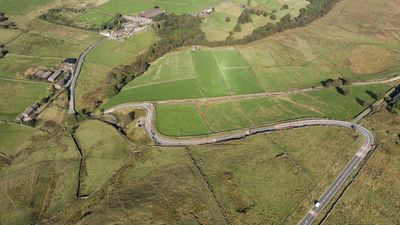
A celebration of the Holme Moss hillclimb will be held from 10am – 2pm on Saturday 13th August. Cars will gather at The Fleece pub and have a celebration, with non-competitive runs up the hill. £5 for a commemorative brochure, all profits to Yorkshire Air Ambulance. More details through the year.
1920 saw the first Holme Moss Hill Climb, organised jointly by the Huddersfield, Halifax and Bradford Automobile clubs. The first event was won by Capt Malcolm Campbell driving his Blue Bird Talbot. Over the four years that followed, famous drivers of the day such as Archie Frazer Nash, Raymond Mays, Parry-Thomas and local favourite Eddie Hall, competed for FTD on the fearsome hill.